
ITEN Request access

Ichnos Art of Theia

Digital infrastructure in the service of art

What is authentic does not fear time.

Building digital presence and trust around Artists, Artworks and Collectors.

See the projects

What makes an artwork authentic?

For centuries, the answer has depended on someone.

The artwork remains.

Its identity should remain with it.

  1. An artist. Dies.
  2. A workshop. Changes hands.
  3. A collector. Sells.
  4. An expert. Retires.
  5. A committee. Dissolves.
  6. A catalogue. Goes out of print.

Three moments when the way we knew an artwork failed.

Every age produced a method. Every method left something behind.

  1. Room IThe copy
  2. Room IIThe workshop
  3. Room IIIThe board
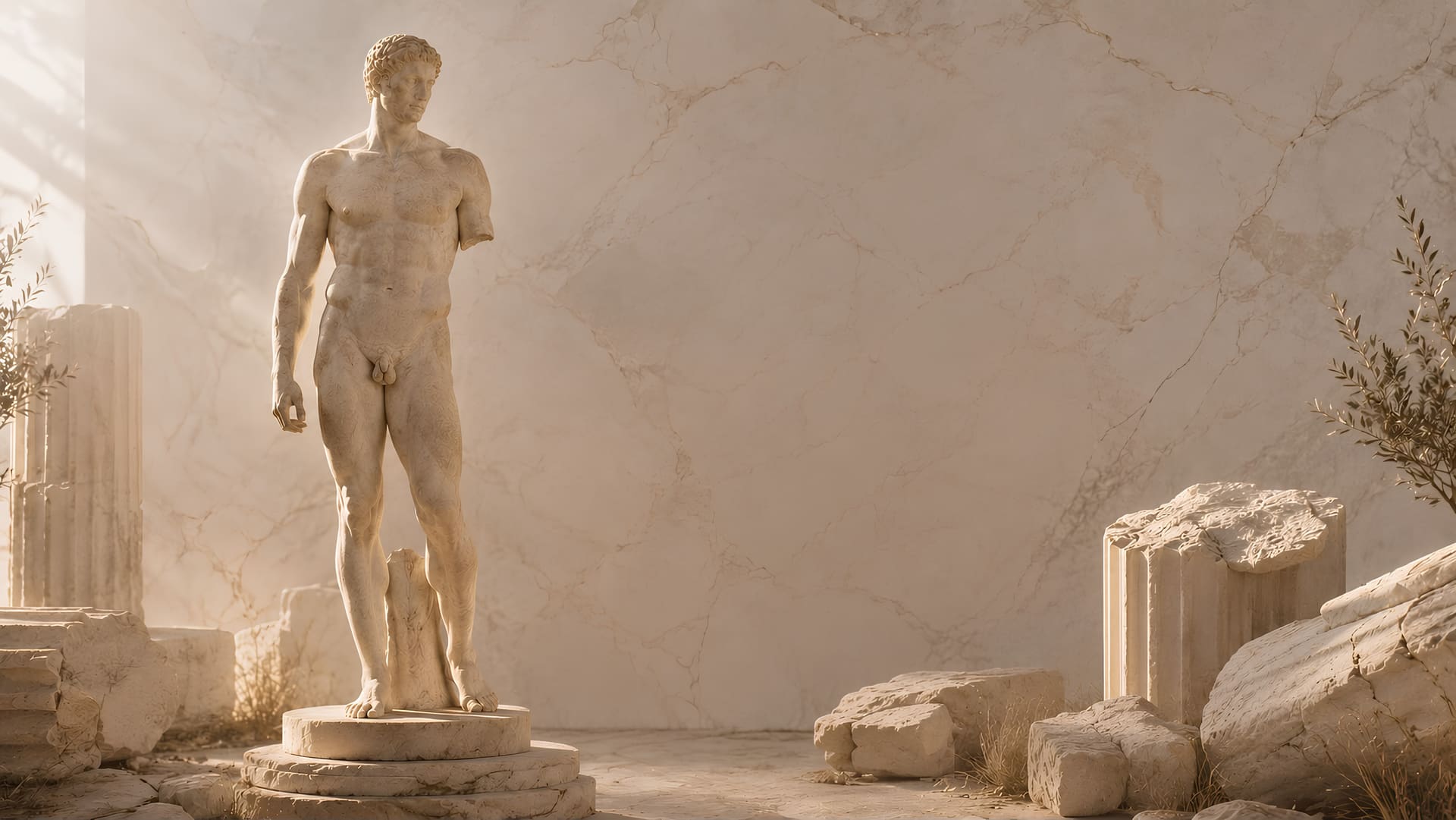
Marble copy after a Greek bronze
Marble copy after a Greek bronze. Rendered study. Not a document of a specific work.

Roman Imperial periodAfter Greek originals

The first failure

The original disappears.

The copy outlives the original

Greek sculpture in bronze was worth more melted than kept. Most of it went, and what reaches us instead are marble copies cut centuries later, in another country, by hands nobody recorded.

The object survives. The original does not.

It is one of art history’s great paradoxes: for a great deal of Greek sculpture, we know an original only through reproductions of it. The object in the room is real. The thing it is evidence of is gone.

  • The objectRendered study after Roman marble copies of Greek bronzes. Not a document of a specific work.
  • SourceMuch of what is known of Greek bronze sculpture survives only through Roman marble copies. The bronzes themselves were recycled for their metal.
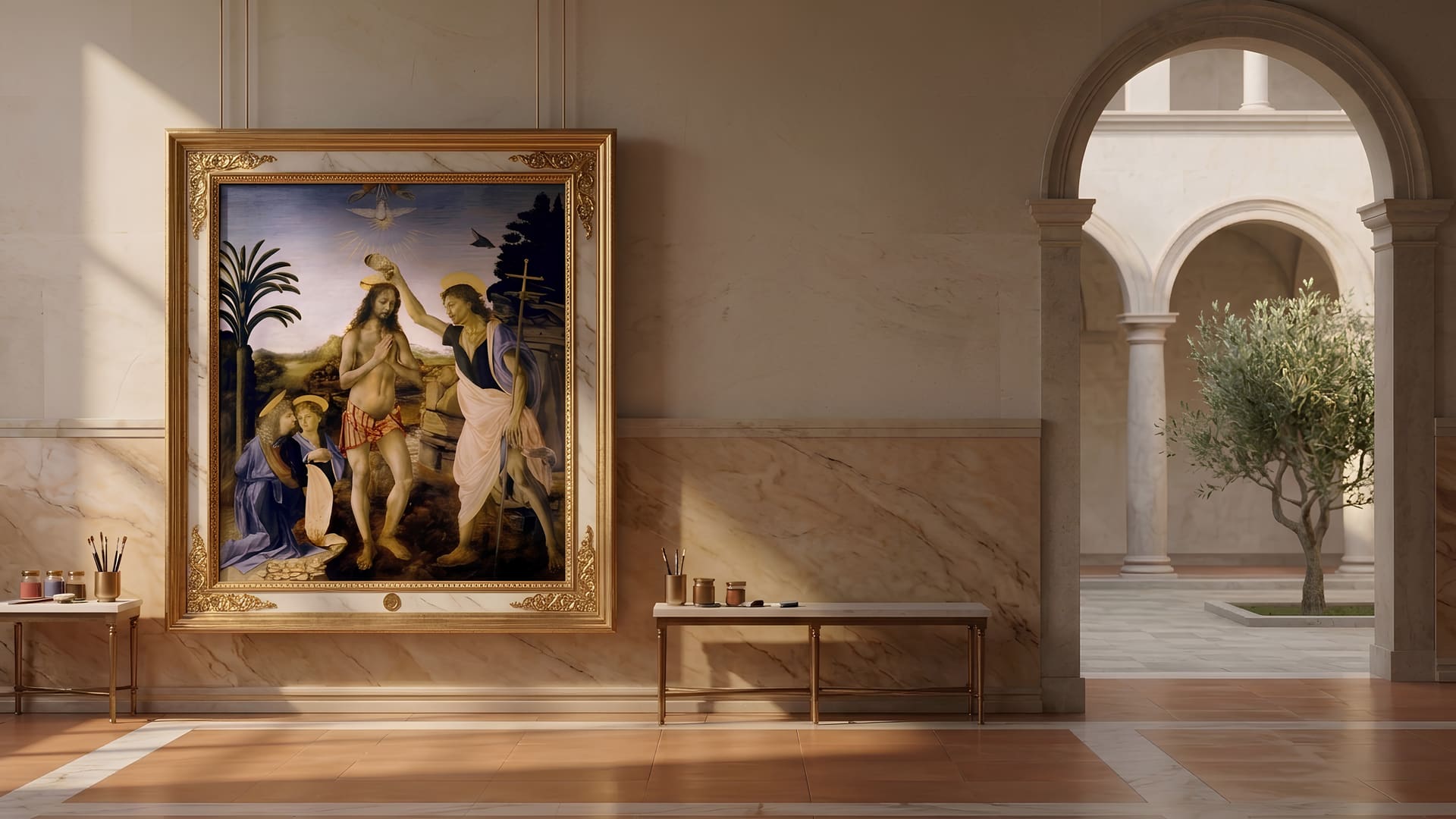
The Baptism of Christ
The Baptism of Christ. c. 1470 to 1475. Oil and tempera on panel. Verrocchio and workshop.

c. 1470Florence

The second failure

The author becomes uncertain.

The Baptism of Christ

Verrocchio’s workshop was not a solitary studio. Many hands could work under one master’s name.

The work survives. The authorship becomes a matter of opinion.

So attribution stops being a question with one answer. Not who made it, but how much did each person make, and who gets to decide.

  • SourceThe Uffizi gives the work to Andrea del Verrocchio and Leonardo da Vinci, noting Leonardo’s hand in the left angel and the collaboration of others.
  • WorkThe Baptism of Christ. c. 1470 to 1475. Oil and tempera on panel. Verrocchio and workshop.
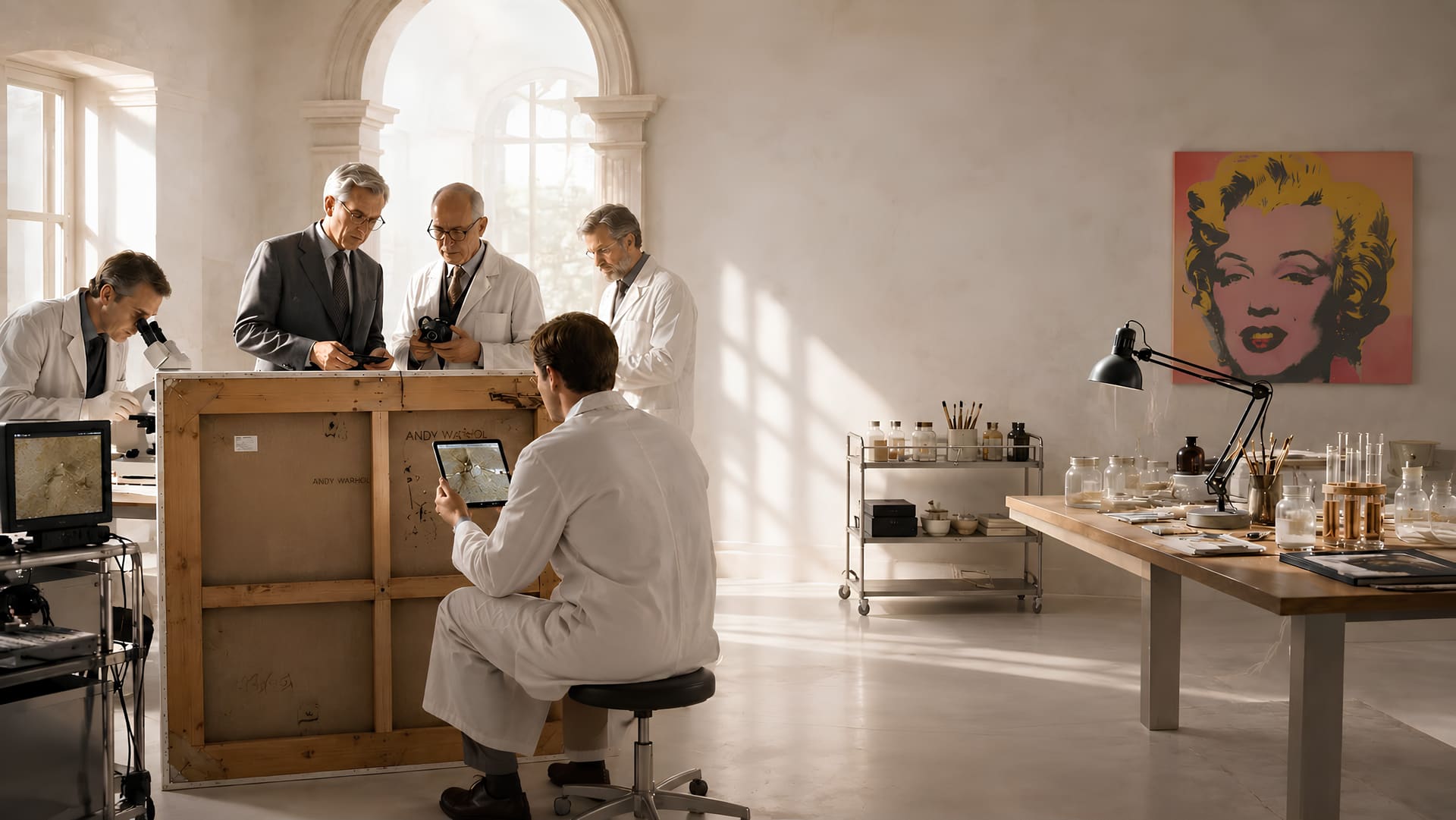
Technical examination
Technical examination. Diagnostic study of a work of contested attribution.

1995 to 2011New York

The third failure

The judgment becomes unsustainable.

The Warhol Authentication Board

Industrial production had entered the studio. Assistants, printers, acetates, silkscreens and editions made one simple question very hard to answer: where does the artist end and the artwork begin.

The market grew. Judgment could no longer carry the weight of it.

The problem was no longer detecting a fake. It was defining authorship.

  • SourceThe Andy Warhol Foundation established the Board in 1995 to review works attributed to Warhol. In 2011 it was authorized to cease operations.
  • WorkTechnical examination. Diagnostic study of a work of contested attribution.

2026

Identity, not judgment.

The artwork remains physical.

Its identity becomes persistent.

Not an expert deciding what the object is after the fact. Not a committee that may exist tomorrow, or may not.

A documented identity established at the source.

By the artist.For the artwork.For every future collector.

A work leaves a trace. An artist leaves a voice.

Ichnos keeps the first. Luce, in collaboration, the second.

The project

Ichnos

The trace of the work.

Digital certification and documentation. It gathers and gives longevity to the signature an artist makes while alive, keeping the declaration of authorship of the work. The Ichnos card is its physical access point.

Artist · Artwork · Documentation · Provenance

Let’s talk about Ichnos
ICH · 0001 · 2026
Rendering of the card at design stage. Final industrial design to follow.

The Ichnos card

One object. One identity. One permanent bridge between the physical and the digital.

The artwork does not become digital.

Its provenance becomes accessible anywhere.
Every story beginswith a meeting.

Are you an artist, a collector or a professional in the field? Tell us what you want to preserve.

Start a conversation

eugenio.cobalto@artoftheia.com

Three questions the record has to answer.

  1. What does it mean to authenticate?

    To make a claim.

    Ichnos makes that claim traceable.

  2. What does it mean to communicate?

    To transmit identity across time.

    Ichnos gives that identity a persistent record.

  3. What does it mean to remember?

    To preserve what would otherwise depend on memory.

    Ichnos turns memory into documentation.